Recent Articles

Harvard Health Blog

Read posts from experts at Harvard Health Publishing covering a variety of health topics and perspectives on medical news.

 
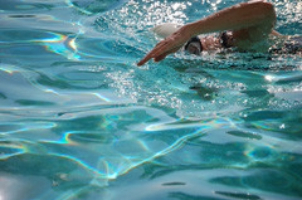
If you have arthritis, exercise can help keep your joints mobile and your muscles strong. Swimming and other water-based exercise are especially good because they’re easy on the joints. Harvard Health editor Julie Corliss discusses ways in which exercise can help you cope with—and even improve the symptoms of—arthritis.
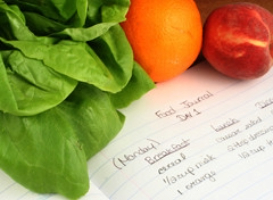
It’s so easy to pick up fast food or take out food that no one really needs to cook anymore. That’s great if you’re short on time, but not so great if your goal is healthy eating. The Harvard Medical School 6-Week Plan for Healthy Eating offers tips for planning and preparing healthy food at home.
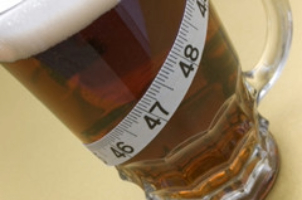
Extra fat that accumulates around the abdomen goes by many names: beer belly, spare tire, love handles, apple shape, middle-age spread, and the more technical “abdominal obesity.” No matter what the name, it is the shape of risk.
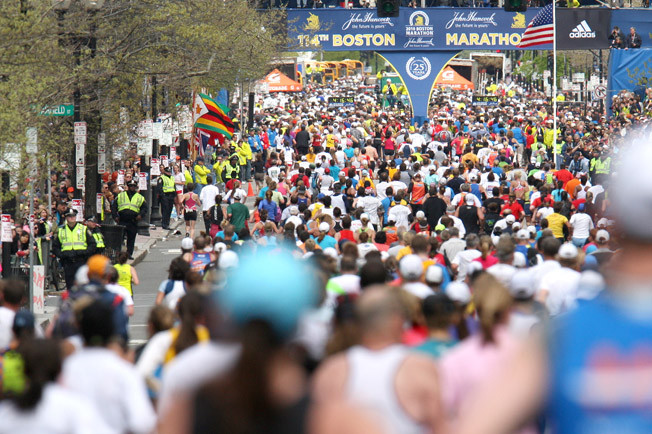
Perhaps up to 40% of runners in tomorrow’s Boston Marathon will end up “hitting the wall,” notes Harvard Health Letter editor Peter Wehrwein. This means that their bodies have run out of the carbohydrates needed to sustain intense physical activities like long-distance running. But one Harvard/MIT student and marathon runner has developed an online tool that allows runners to calculate just how many extra calories they should get from high-carbohydrate food or drink before a marathon to avoid hitting the wall.
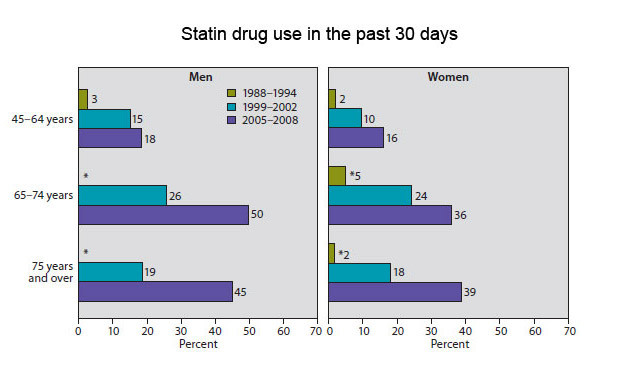
The latest annual snapshot of health in America, a report called Health, United States, 2010 offers hours of browsing and food for thought for anyone interested in health trends. Harvard Health Letter editor Peter Wehrwein connects the dots between use of cholesterol-lowering statins and fewer deaths from heart disease.
One way I procrastinate is to read articles on procrastination. There is quite a good, short, helpful one in this week’s issue of Nature.
Feeling stressed? Call a timeout, counsels “Stress Management,” a new Special Health Report from Harvard Health Publishing. One way to stop stress and worry from taking over your days involves setting aside 15 minutes or so to focus on your problems. When the time is up, try to leave your worries aside and focus on something more productive. Writing down your worries and dropping them in a “worry box” can also help, explains Harvard Health editor Annmarie Dadoly.
Mindfulness meditation can ease stress. It also seems to do a lot more, like help with physical and psychological problems from high blood pressure and chronic pain to anxiety and binge eating. New research shows that mindfulness meditation changes the way nerves connect.
In the longest-running trial to date, Swedish researchers conclude that PSA screening does little to cut a man’s chances of dying of prostate cancer.
Men have long been encouraged to have routine tests for prostate-specific antigen as a way to detect prostate cancer early. Although early detection should save lives, it doesn’t seem to work that way for slow-growing prostate cancer. The longest-running trial to date shows that PSA testing doesn’t help men live longer.
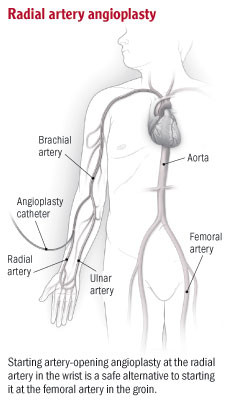
Angioplasty is a simple, safe alternative to open heart surgery for restoring blood flow through a narrowed or blocked coronary artery. Results of a large international trial show that a new approach to angioplasty that begins with the radial artery in the arm is as effective and safe as the traditional approach, which begins with the femoral artery in the groin.
Confused about how to extend analog parenting into the digital world? New guidelines from the American Academy of Pediatrics offers practical advice to pediatricians (and parents) to help children use social media tools safely and in ways that encourage them grow socially and emotionally. Michael Miller, M.D., editor of the Harvard Mental Health Letter, says the guidelines are “anchored in what we know about child and adolescent development rather than any perceived special influences of the social network.”
At a Harvard Medical School talk on migraine and food, a nutritionist from Harvard-affiliated Beth Israel Deaconess Medical Center delivered a message that people in the audience probably didn’t want to hear: “There are no specific dietary recommendations for migraine sufferers,” said Sandra Allonen. But she did have some advice to offer—and she emphasized that the connection between food and migraine is a very individual one.
Doctors use this test to screen for prostate cancer, but it does not provide a definitive diagnosis.
Artificial food coloring has been blamed for causing hyperactivity in children. For most kids, there is no connection between food coloring and hyperactivity, an FDA panel has concluded. But it also noted that certain children with attention deficit hyperactivity disorder (ADHD) may be uniquely vulnerable, not just to food colorings, but to any number of food additives. The panel said that food additives themselves are not inherently toxic to the nervous system, but that some children have a unique intolerance to these substances.
When a hitter makes solid contact with a baseball, the ball leaves the bat travelling very fast. The type of bat matters — ball speeds are higher with aluminum and newer composite bats than they are with wood bats. Why? Wood bats are solid. When one smacks a ball, the bat stays fairly rigid and the ball flattens out for a millisecond, absorbing some of the energy in the bat-ball collision. Aluminum and composite bats are hollow. When they strike a baseball, the bat gives. That means more of the energy of the bat-ball collision is transferred to the “bounce” of the ball off the bat. Harvard Health Letter editor Peter Wehrwein talks with experts in sports injury, the physics of baseball, and bat testing to explain connections between bat type and injury.
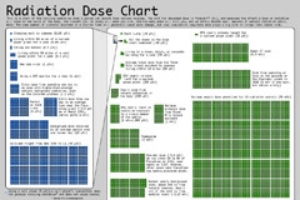
It can be hard to understand what the release of radiation from Japan’s earthquake-damaged Fukushima Daiichi nuclear power plant means in terms of human health. Are the radiation levels dangerous and, if so, how dangerous. Most reporters put the risk into perspective using words. Cartoonist Randall Munroe and nuclear reactor operator Ellen McManis have put together different ways of illustrating the risk visually, while radio producer Adam Ragusea offers an audio illustration of various radiation exposures.
A panel discussion at Harvard School of Public Health called “Boosting Vitamin D: Not Enough or Too Much?” highlights the current controversy over the once-overlooked sunshine vitamin. A panel of experts assembled by the Institute of Medicine recommends a daily dose of 600 IU per day for everyone from ages 1 to 70 and 800 IU for those over 70. Other experts think the IOM recommendation is too low. One way to get vitamin D is to spend a few minutes a day outside in the sun, but that’s a hot-button issue because sun exposure is a cause of skin cancer.
New government statistics show that there are nearly 12 million cancer survivors in the United States. In many ways this is terrific news, and a testament to improved diagnosis and treatment options. But there’s a flip side to surviving cancer, and many survivors are never totally “free” of the disease. The ongoing psychological and emotional issues can be almost as much a challenge as cancer treatment was. Harvard Health editor Ann MacDonald explores the ongoing fear of recurrence, survivor guilt, the “Damocles syndrome,” and more.
Two international and large randomized studies provide the most convincing evidence thus far that PSA based testing does nothing or meaningfully little to reduce the death rate from prostate cancer and confirm many earlier studies that came to the same conclusions. In this video, Marc Garnick, MD, discusses the implications.
Heart failure, the condition that took Elizabeth Taylor’s life, affects millions of Americans. The term “heart failure” is a scary one, conjuring up images of a heart that is suddenly unable to work. In truth, it represents a gradual decline in the heart’s ability to pump enough blood to meet the body’s needs. As the heart weakens, all parts of the body suffer the consequences. Harvard Heart Letter editor PJ Skerrett explains what heart failure is, how it affects the body, and what can be done to treat it.
Two volunteers testing the new “Harvard Medical School 6-Week Plan for Healthy Eating” describe following Week 5 of the plan: Making sense of snacks. Both related the challenge of avoiding the bowl of M&Ms in the office. Tonya realized how many calories she got from snacking each day, while Helen made herself some simple rules, like planning her snacks and drinking water first if she thinks she’s hungry.
Having sex (or performing any kind of physical activity) triples the risk of having a heart attack, according to a new study. But there’s more to the story. The odds of having a heart attack during sex are about 1 in one million; tripling the risk boosts it to 3 in one million. In other words, sex can cause a heart attack, but usually doesn’t. And the more a person exercises, or has sex, the lower the chances of having a heart attack during the activity.

Free Healthbeat Signup

Get the latest in health news delivered to your inbox!

Stay on top of latest health news from Harvard Medical School.

Plus, get a FREE copy of the Best Diets for Cognitive Fitness.

This site is protected by reCAPTCHA and the Google Privacy Policy and Terms of Service apply.