Recent Articles

Harvard Health Blog

Read posts from experts at Harvard Health Publishing covering a variety of health topics and perspectives on medical news.

 
1. Health care reform How could the health care reform legislation that President Barack Obama signed into law on March 23, 2010, not be the #1 story of the year? Whether you are for or against it, the Patient Protection and Affordable Care Act is nothing if not ambitious, and if implemented, it will fundamentally alter how American health care is financed and perhaps delivered.
It depends on what you mean by “work.” Results reported in today’s Annals of Internal Medicine found that echinacea may reduce the length of a weeklong cold by 7 to 10 hours and make symptoms a little less onerous. That can’t be characterized as a major effect, so many people may figure that the trouble and expense of echinacea just isn’t worth it (fortunately, side effects from echinacea don’t seem to be much of an issue).
Perhaps as many as one in every 5 American adults will get a prescription for a painkiller this year, and many more will buy over-the-counter medicines without a prescription. These drugs can do wonders—getting rid of pain can seem like a miracle—but sometimes there’s a high price to be paid.
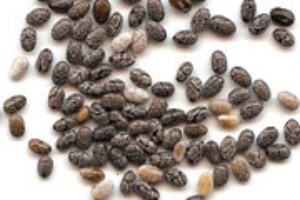
Like swallows returning to San Juan Capistrano in the spring, Chia Pets begin appearing every December on late-night television and in the gift aisles of many stores. (Full disclaimer: I bought one for the Yankee Swap at Harvard Health Publication’s annual Christmas party.) Water these ceramic figures and they sprout a green “fur” from seeds embedded on the surface. Silly? Sure, that’s why they are such a hit. What you might not know is that the seeds may someday be a real gift for people with diabetes.
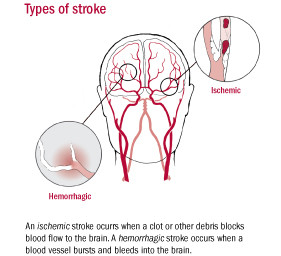
Stroke killed 2,000 fewer Americans in 2008 (the last year with complete numbers) than it did in 2007, the Centers for Disease Control and Prevention (CDC) said yesterday in its latest annual Deaths report. That dropped stroke from the third leading cause of death in the United States to the fourth.
Only one-third of people with major depression achieve remission after trying one antidepressant. When the first medication doesn’t adequately relieve symptoms, next step options include taking a new drug along with the first, or switching to another drug. With time and persistence, nearly seven in 10 adults with major depression eventually find a treatment that works.
Vitamin D has been talked about as the vitamin — the one that might help fend off everything from cancer to heart disease to autoimmune disorders, if only we were to get enough of it.
One of the things I like most about Thanksgiving is the laughter around the dinner table. The food is great, make no mistake. But it’s the sounds of happiness—the high peal, the good-natured guffaw, the snort-and-shaking-shoulders, and the deep belly laugh—that really make me give thanks. Laughter isn’t just a way to stay connected with family and friends. If new research pans out, it is also doing our hearts some good.
He points out that the National Football League (NFL) has been slow to assess penalties on players who take violent shots at their opponents’ heads. There is much ambivalence among football insiders, evidenced by the comments of former players and coaches covering the game for television. Some of them support tightening the rules, others complain the game will be weakened by more restrictive rules on how players can hit each other.
Health apps. Smart phones like the iPhone and Android aren’t just phones. They are also pocket-sized computers capable of running sophisticated applications, or apps. Hundreds of health apps have been developed to help people eat better, exercise more, monitor blood pressure, reduce stress, and even perform cardiopulmonary resuscitation. In the November issue of the Harvard Health Letter, editor Peter Wehrwein takes a look at the rapidly evolving world of health apps, and points you to some top-rated ones.
The American Psychological Association has just released the results of its 2010 Stress in America survey. Among the findings: Nearly 75% of Americans who responded to an online survey said that their stress levels are so high that they feel unhealthy.
Millions of American children will get billions of sugar- and fat-laden treats on Sunday night in a tradition that has its roots in pagan and Christian rituals.
What is it about getting scared by a haunted house, a roller coaster, or a bungee jump that some people find exhilarating and others find downright frightening? It could be how you are wired, writes Dr. Robert Shmerling in a post on why we love to scare ourselves silly on MSN Health and Fitness.
Many diet books advise people to chew slowly so they will feel full after eating less food than if they ate quickly. As we explain in the current issue of the Harvard Mental Health Letter, eating slowly doesn’t always work, but when it does, the reason has as much to do with the brain as with the gut.
Reading medical journals is the main occupational hazard I face as editor of the Harvard Heart Letter. This task is like parachuting into a desert at high noon—I drop into a barren, colorless landscape and then struggle across dry, soporific terrain. The content isn’t to blame; it is usually interesting, and is sometimes even compelling. It’s the style, especially use of the passive voice, that makes my brain drift and my eyelids droop.
A Swedish study suggests that a single PSA measurement at age 60 can predict the likelihood that a man will die of prostate cancer by age 85, and that at least half of men no longer need to be screened after age 60. But the study has significant limitations, leaving many experts skeptical.
An induced pluripotent stem cell is an adult cell, often a skin cell, that has been “reprogrammed” so it takes on the pluripotent properties of an embryonic cell. Pluripotency in this context means the capacity for a cell to generate cells of all different types. If a cell is pluripotent, it can give rise to blood cells, heart cells, kidney cells, brain cells—you name it.
Only one in six Americans meet recommended targets for physical activity. If you aren’t one of them, identifying your barriers to exercise can help.
A study published in tomorrow’s Journal of the American Medical Association (JAMA) adds to the evidence that the old way of doing CPR—alternating chest compressions with blows into the mouth—is needlessly complicated in most cases (there are exceptions, which we will get into below).
The report summarizes responses to a standardized questionnaire administered in 2006 and 2008. The researchers asked 235,067 adults about symptoms during the 2 weeks prior to receiving the call.

Free Healthbeat Signup

Get the latest in health news delivered to your inbox!

Stay on top of latest health news from Harvard Medical School.

Plus, get a FREE copy of the Best Diets for Cognitive Fitness.

This site is protected by reCAPTCHA and the Google Privacy Policy and Terms of Service apply.