

Harvard Health Blog
Read posts from experts at Harvard Health Publishing covering a variety of health topics and perspectives on medical news.

People tend to think that the telltale sign of depression is sadness—a pervasive down, dragging feeling that won’t let up, day after day. But depression often manifests itself as something else entirely—like aches and pains or memory lapses. These “unusual” symptoms are actually quite common. They can mask depression—and delay an important diagnosis—especially in older people, who often display their depression in ways other than sadness. These include trouble sleeping, lack of energy, fatigue, trouble concentrating or remembering, loss of appetite, and aches and pains that don’t go away. If you have one or more of these symptoms that can’t be traced to an illness or ailment, a frank talk with a trusted doctor about the possibility of depression might be a good step forward.

The results of a new trial being made public today should get everyone interested in following a Mediterranean-style diet. What makes these new results so important is that they come from a randomized controlled trial, what many consider to be the gold standard of medical research. In the five-year trial, there were fewer heart attacks, strokes, and deaths from cardiovascular disease among participants who followed a Mediterranean-type diet than among those following a low-fat diet. A Mediterranean-style approach to food represents a diet of abundance, not restriction. Add not smoking and daily physical activity to this flexible eating strategy and you have a blueprint for protecting, and perhaps even improving, health.

The message that drinking a little alcohol is good for the heart has gotten plenty of attention. A new study linking alcohol with increased risk of dying from various cancers may temper that message a bit. About 4% of cancer deaths worldwide are related to alcohol use. A new study shows the in the United States, alcohol causes 3.5% of cancer deaths, or about 20,000 cancer-related deaths each year. The most common alcohol-related cancers were mouth, throat, and esophageal cancer in men, and breast cancer in women. At the same time, drinking alcohol in moderation (no more than two alcoholic drinks a day for men and no more than one a day for women) has been linked to lower rates of heart disease and deaths related to it. Advances in genetics may one day let us predict more accurately who can use alcohol in moderation and who should avoid it completely. Until then, it’s best to personally weigh the benefits and risks, ideally with a trusted health care provider.

The term “chocoholic,” usually said with a smile, actually nods to a potentially serious question: can a person become addicted to food? There are three essential components of addiction: intense craving, loss of control over the object of that craving, and continued use or engagement despite bad consequences. People can exhibit all three of these in their relationships with food. It’s most common with foods that deliver a lot of sugar and fat — like chocolate — because they trigger reward pathways in the brain. In some animal studies, restricting these foods induced a stress-like response consistent with the “withdrawal” response seen in addiction. Much of the scientific discussion about food addiction has been sparked by the epidemic of obesity sweeping the U.S. and many other countries. Many people who are overweight crave food, lose control over eating, and experience negative health effects that should, but don’t, serve as a deterrent. The influence of stress on eating provides another link between food and addictive behavior.
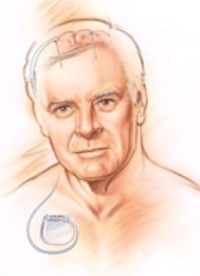
A pacemaker-like device that stimulates the brain can help control some of the muscular problems brought on by Parkinson’s disease, the second most common neurodegenerative problem in America. A report in tomorrow’s New England Journal of Medicine may prompt doctors to recommend its use sooner rather than later. For more than a decade, deep-brain stimulation has been used to help control Parkinson’s symptoms. It involves placing a tiny wire called a lead (pronounced leed) in the part of the brain that controls movement and a matchbook-sized stimulator under the skin below the collarbone. The lead and stimulator are connected to each other by a second wire that runs under the skin of the shoulder, neck, and head. The device emits small pulses of electricity that help coordinate movement. Deep-brain stimulation traditionally isn’t used until a person has lived with Parkinson’s for a decade or more. The new report in the NEJM will give doctors more leeway to use this therapy earlier in people with Parkinson’s.

To get or stay healthy, many people focus on exercising more, eating better, or quitting smoking. Getting recommended vaccinations is another relatively simple strategy for health that an alarming number of Americans overlook. Vaccination isn’t just for kids. Adults should get immunized against infectious agents that cause the flu, pneumonia, whooping cough (pertussis), shingles (herpes zoster), and more. The latest schedule for adult immunization has been published in the Annals of Internal Medicine. It now recommends adding a second anti-pneumonia vaccine for people with compromised immune systems. It also says that all adults age 65 and older should get the tetanus, diphtheria, and pertussis (Tdap) vaccine, as should pregnant women with each pregnancy. When it comes to adult immunization, Americans aren’t doing very well. One-third of older Americans don’t get the pneumococcal vaccine, 84% don’t get the shingles vaccine, and 87% don’t get the tetanus, diphtheria, and pertussis vaccine. In addition to protecting yourself from an infectious disease, immunization also protects others.

Getting extra calcium from supplements is supposed to be good for your bones. The latest in a string of studies heightens concern that this simple practice could end up being bad for your heart. The results support growing recommendations to get calcium from food, not pills. The latest evidence comes from the NIH-AARP Diet and Health Study, which has followed the health of nearly 400,000 men and women since 1995. Over 12 years of follow-up, men who took more than 1,000 milligrams (mg) of daily supplemental calcium were 20% more likely to succumb to heart disease than those who didn’t take calcium supplements. There was no connection between calcium supplements and heart disease in women (which has been seen in earlier studies), and no connection with calcium from food. This one study isn’t enough to find calcium guilty of heart disease in the first degree. But it’s not the only research to point the accusing finger. This line of research has some experts placing greater emphasis on a nutritious, calcium-rich diet and weight bearing exercise than on calcium supplements for keeping bones strong.

File this under “if a little bit is good, a lot isn’t necessarily better:” taking high-dose vitamin C appears to double a man’s risk of developing painful kidney stones. In an article published yesterday in JAMA Internal Medicine, Swedish researchers detail a connection between kidney stone formation and vitamin C supplements among more than 23,000 Swedish men. Over an 11-year period, about 2% of the men developed kidney stones. Men who reported taking vitamin C supplements were twice as likely to have experienced the misery of kidney stones. Use of a standard multivitamin didn’t seem to up the risk. Many people believe that extra vitamin C can prevent colds, supercharge the immune system, detoxify the body, protect the heart, fight cancer, and more. To date, though, the evidence doesn’t support claims that extra vitamin C is helpful. If high-dose vitamin C doesn’t improve health, then any hazard from it, even a small one, is too much.

An army of nutrition experts is constantly reminding us that most fast food is bad for health. But they’re not around to back you up when your children or grandchildren unleash powerful weapons of cuteness to convince you to stop at a fast-food chain. It’s hard not to give in when the ones you adore put on the pressure, even when they’re older. One new study links several weekly fast-food meals with increased risks of asthma, rhinitis, and eczema. Another shows that when kids eat out they take in up to 300 more calories than when eating at home. Stacey Nelson, a registered dietitian who is a clinical nutrition manager at Harvard-affiliated Massachusetts General Hospital, offers some advice for when fast food is the only option.

When it comes to fighting cancer, “get it out” is a common and understandable response. It’s what prompts some women with early-stage breast cancer to choose mastectomy, an operation to remove the entire affected breast. Results from the largest-ever observational study offers reassurance to women who choose a more conservative approach—removal of just the tumor and some tissue around it (lumpectomy) followed by radiation therapy. In fact, the study showed that, as a group, women who chose lumpectomy plus radiation had lower death rates from breast cancer and all causes than women who chose mastectomy. The women who appeared to reap the biggest survival benefit from lumpectomy plus radiation therapy were those over age 50 with estrogen-positive breast cancer, with 13% lower mortality from breast cancer and 19% lower for all causes. The results were reported online today in the journal Cancer. For early-stage breast cancer, mastectomy has been proven to cure or at least retard the disease. It’s a reasonable and understandable choice, especially given how well breast surgeons today can reconstruct a breast. For women who choose to have lumpectomy plus radiation therapy, the new study provides yet more scientific reassurance that this approach is at least as good as mastectomy.

At least once a week throughout my childhood, a migraine would force my mother to retreat into her bedroom. She’d shut the blinds and burrow under the covers, overwhelmed by a pain so severe it turned the faintest sound into an agonizing roar and launched waves of nausea with the slightest movement. Though my family and I tried to be sympathetic, it was hard for us to fully comprehend my mother’s migraines or understand why she had to miss so many events because of them. When you’re on the outside looking in, you can’t begin to appreciate how severely disabling—and life disrupting—chronic migraine can be. A study from Thomas Jefferson University in Philadelphia, released last week in PLoS One, found that chronic migraine sufferers experience as much social stigma as people with epilepsy—a disease that produces far more obvious and dramatic symptoms. Some of that stigma is external—for example, getting treated differently by friends or colleagues, and some is internal.
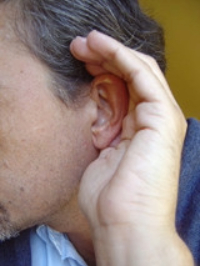
Loss of hearing represents more than just difficulty hearing sounds. It can lead to social isolation and depression. A new study suggests that hearing loss may also be linked to loss of memory and thinking skills. In a study published online yesterday in JAMA Internal Medicine, Johns Hopkins researchers found that declines in thinking skills happened faster during a six-year period among people with hearing loss than among those without it. Among the nearly 2,000 volunteers, all over age 70, those with hearing loss we also likely to develop “cognitive impairment,” defined as a substantial reduction in the score on a key test called the Modified Mini-Mental State Examination. The researchers estimated that it would take a hearing-impaired older adult just under eight years, on average, to develop cognitive impairment compared with 11 years for those with normal hearing. This new study shows an association. It does not prove that hearing loss causes a decline in thinking skills. The work also raises a huge question: can treating hearing loss prevent or slow an age-related decline in brain function?
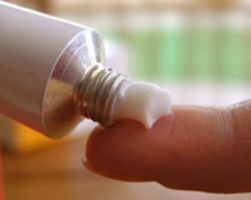
When it comes to relieving the pain of achy joints, many people reach for a pain-relieving pill like aspirin or ibuprofen. There may be a better way. When the source of pain is close to the surface, applying a cream, gel, patch, or spray that contains a pain reliever right where it hurts can ease pain and help avoid some of the body-wide side effects of oral pain relievers. These so-called topical analgesics work best for more superficial joints like the knees, ankles, feet, elbows, and hands. The active ingredient in most topical analgesics is a nonsteroidal anti-inflammatory drug (NSAID) like ibuprofen, naproxen, aspirin, or diclofenac. These medications target inflammation, which contributes to pain, swelling, and stiffness. The advantage of using a topical analgesic is that the medication works locally. Targeting pain more precisely using a medication applied to the skin can help skirt the side effects of oral drugs. This can be a boon for people whose stomachs are sensitive to NSAIDs.

The gun control proposals that President Barack Obama unveiled yesterday highlight the intensely personal nature of this issue. What often gets lost in the debate is the public health dimension of firearm possession. In 2011, the last year for which we have complete statistics, 32,163 American men, women, and children were killed by firearms. Since 2000, the running total is more than 400,000. That’s a staggering loss of life. A few are accidents, some are suicides, and about one-third are homicides. One way to sidestep the contentious debate over gun control would be to focus more effort on preventing gun violence. In a compelling article, three Harvard-affiliated researchers make the case for approaching gun violence as we have tackled other serious public health issues. Writing in JAMA, Drs. Dariush Mozaffarian, David Hemenway, and David Ludwig summarize lessons learned from successful efforts at reducing deaths from smoking, motor vehicle accidents, and poisoning and suggest ways to apply similar approaches to stemming gun violence. By talking about gun violence as a public health issue, and treating it that way, we may be able to save thousands of lives that are now needlessly lost each year.

The FDA is urging doctors to lower the starting dose of zolpidem, a popular prescription sleep aid, due to concerns that the drug can linger too long in the body. This causes daytime drowsiness that has led to car accidents. Sleep aids affected by the FDA’s announcement includes generic zolpidem and brand names Ambien, Ambien CR, Edluar, and Zolpimist. The FDA lowered the starting dose for women from 10 milligrams (mg) to 5 mg; for men it is now 5 to 10 mg. The drug should be taken right before going to bed. Taking too much of a sleep drug can give you a “hangover” of daytime drowsiness the next morning that could raise the risk of accidents or falls. Because people respond to medications in their own ways, it’s safest to start taking a sleep drug on a weekend, and start with a dose lower than the maximum recommended starting dose. If you feel drowsy the next day, the dose can be reduced; if it didn’t work, the dose can be increased.

“Whole grain” has become a healthy eating buzzphrase, and food companies aren’t shy about using it to entice us to buy products. Browse the bread, cereal, or chip aisle of your favorite grocery store and you’ll see what I mean. Last year, nearly 3,400 new whole-grain products were launched, compared with just 264 in 2001. And a poll by the International Food Information Council showed that 75% of those surveyed said they were trying to eat more whole grains, while 67% said the presence of whole grains was important when buying packaged foods. But some of the products we buy may not deliver all the healthful whole-grain goodness we’re expecting. Identifying a healthful whole-grain food can be tricky. A new study from the Harvard School of Public Health says the best way is to choose foods that have at least one gram of fiber for every 10 grams of carbohydrate. Fiber and carbs are both listed on the nutrition label.

After getting too little sleep Monday through Friday, many teens try to catch up on weekends, sometimes straggling out of bed after noon. While they may feel like they are doing their bodies a favor, they actually aren’t. Sleeping late on Saturday and Sunday may fill a teen’s sleep deficit, but it creates a bigger problem. It allows his or her inner clock to further drift away from the external clock, worsening the shift begun by delaying bedtime on school nights. The result: the circadian sleep is thrown out of whack, which makes it much more difficult to get up at the usual wake time. In effect, by sleeping late on Saturday and Sunday, your teen is suffering from the equivalent of a five-hour jet lag when it’s time to get up on Monday morning. The alarm clock may be saying 6:00 am, but his or her inner clock is reading 1:00 am. This will make it much harder for your teen to concentrate and take in anything at school.

It’s shaping up to be a banner year for the flu. The City of Boston just declared a public health emergency, with 700 cases of the flu reported so far this season, compared to just 70 cases last year. Four Boston residents, all elderly, have died. A similar spike in flu is happening all around the country. According to the federal Centers for Disease Control and Prevention, this year’s flu season is shaping up to be a bad one. By the end of December, the flu was widespread in 41 states. The CDC says that more than 2,000 people have been hospitalized so far; scores of adults have died, as well as 18 children. One way to keep from getting the flu is to get the flu vaccine. (Almost everyone age 6 months and older should be vaccinated.) If you haven’t already done this, it isn’t too late. For more information about the flu, visit Harvard Health Publication’s Flu Resource Center at www.health.harvard.edu/flu

Greater use of generic drugs could save the healthcare system—and American consumers—billions of dollars that would be better spent elsewhere. What’s holding us back? Some consumers are reluctant to use generic medications, thinking they are inferior to “the real thing.” Doctors are also a big part of the problem. Up to half of physicians hold negative perceptions about generic drugs. And a new study to be published in tomorrow’s JAMA Internal Medicine shows that about 4 in 10 doctors sometimes or often prescribe a brand-name drug just because their patients ask for it. Prescribing a brand-name drug when a generic is available is a huge source of wasteful spending that could easily be prevented. People ask for brand-name drugs because they have heard of them through advertising or word of mouth, while their generic alternatives generally aren’t advertised. Doctors could help save billions of dollars by just saying “no.”

If you’ve ever nodded off while driving, you aren’t alone. In a new report from the Centers for Disease Control and Prevention, 4.2% of Americans admitted to falling asleep while driving at least once in the previous month. The just-published survey, conducted in 19 states and the District of Columbia, found the sleepiest drivers in Texas (6.1%) and Hawaii (5.7%), and the most alert ones in Oregon (2.5%) and the District of Columbia (2.6%). Individuals most likely to have fallen asleep while driving were those who said they unintentionally fell asleep during the daytime at least once during the preceding month, those who said they snore at night, and those who reported sleeping less than six hours a night. Keep in mind that these numbers reflect only the percentage of people who were aware they had fallen asleep. They don’t include those who fell asleep while driving without recognizing that had happened.

At the stroke of midnight tonight we ring out the “old” year and begin a new one. For many people, the transition is a symbolic new start, a time to improve health or make other changes. If you are among the millions making a New Year’s resolution or striving to make improve your health in the months ahead, the four articles below may help. On behalf of my colleagues at Harvard Health Publishing, I wish you a new year filled with good health.

Many exercise programs these days spotlight the ever-present abs (abdominal muscles) but pay little attention to the other muscles that form the body’s core. Yet building up all of your core muscles is essential for staying strong and flexible and improving performance in almost any sport. It’s also vital for sidestepping debilitating back pain. Your core includes your back, side, pelvic, and buttock muscles, as well as the abdominal muscles. The core forms a sturdy central link between your upper and lower body. Much like the trunk of a tree, core muscles need to be strong yet flexible. A strong, flexible core underpins almost everything you do, from everyday actions like bending to put on shoes to on-the-job tasks, sports and sexual activity, and more. A strong core can also help you keep your back healthy or recover from back pain. It’s unwise to aim all your efforts at developing rippling abs. Overtraining abdominal muscles while snubbing muscles of the back and hip can set you up for injuries and cut athletic prowess.

Need a new book to read on the Kindle you received as a holiday present? I’d like to recommend one or more of the eight just-published eBooks that kick off the Harvard Medical School Guide series. Published by RosettaBooks, this series aims to give readers help with tricky health issues, like trouble sleeping or dealing with picky eaters, as well as help with life at work and elsewhere.
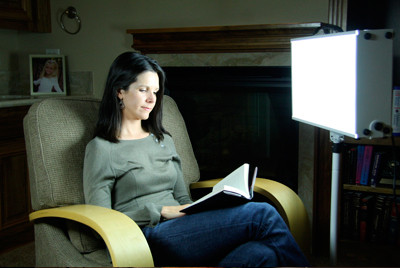
Assuming that the Mayan calendar mania was wrong and the world spins madly on, today marks the shortest daytime of the year in the northern hemisphere. In Boston, we get just nine hours of daylight; Barrow, Alaska doesn’t get any. Although the winter solstice marks a seasonal turning point, with daylight getting incrementally longer from here until June 21, for people with seasonal affective disorder it’s just another day of feeling lousy.

